

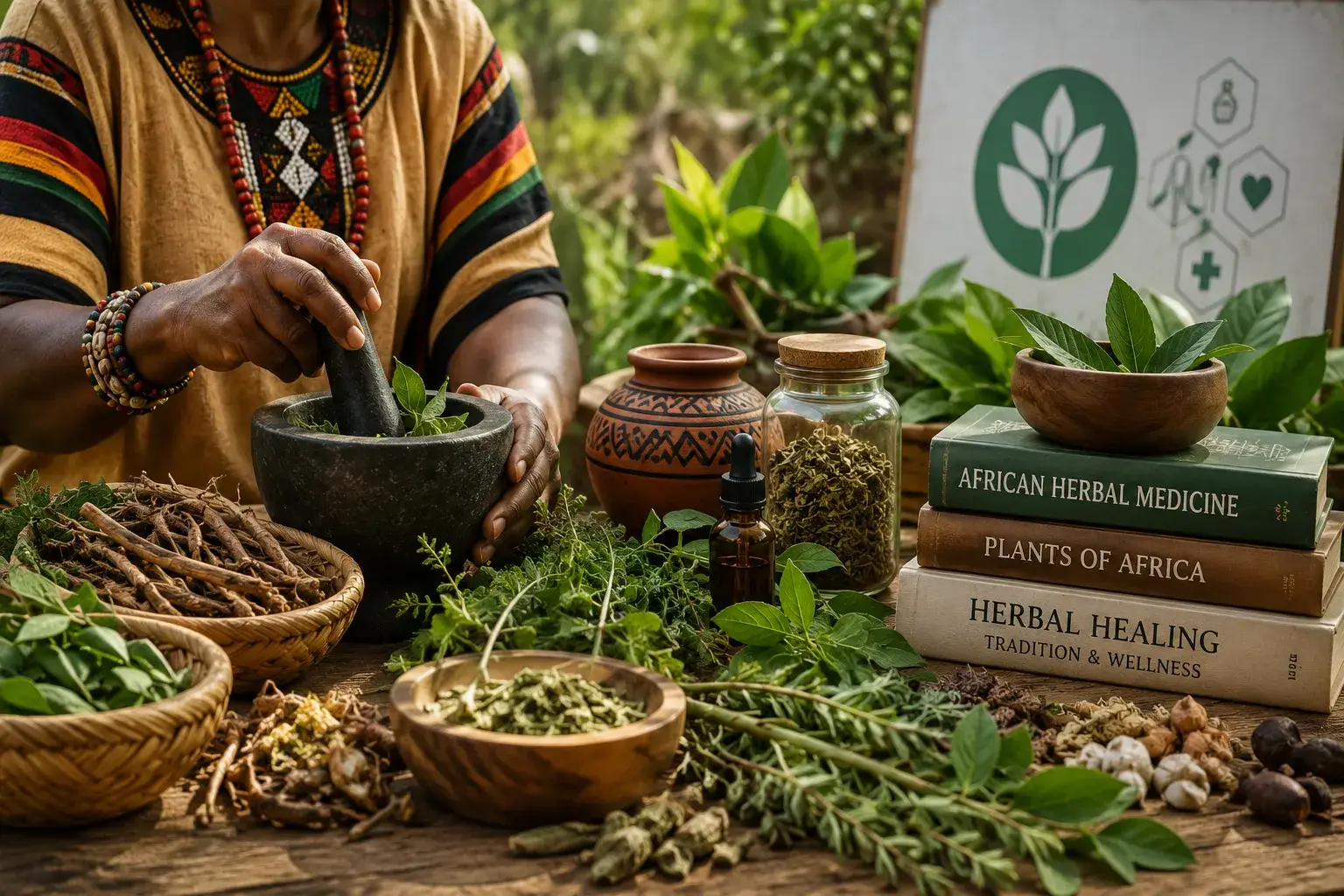
African herbal medicine, Venda herbs and traditional African wellness belong together. They form a living system of plant knowledge. Families in Limpopo still pass this knowledge from one generation to the next. The aim is balance, energy and daily strength. It is not a quick trend. It is culture, land and careful use of local plants.
Traditional African Herbal medicine knowledge is practical. Healers observe plants over many years. They note the root, the bark, the leaf and the season. They also note the person who needs support. Context matters. A plant used after a long hunt is not used in the same way as a plant used for rest.
This knowledge is oral. Elders teach by doing. Young people learn names, smells and limits. Respect is part of the lesson. A strong plant is not a toy. Dose and timing stay in the hands of people who know the land.
Today many readers search for African herbal medicine because they want natural options. They also want a clear story. Where does the plant grow? Who harvests it? How is it prepared? Those questions are fair. Good answers build trust.
Venda herbal practice is more than a recipe. It sits inside family life, ceremony and daily work. In places such as Nzhelele, Luvhengo, Ha-Mutsha, Tshipise and Makhado, plants mark strength and care. Hunters, herders and elders used local roots for stamina and confidence. Women also held and shared this knowledge.
Healers known as Vhomakhadzi and Vhomuligwe keep much of this memory. They teach when a plant may help and when it must wait. They also teach that wellness is social. Sleep, food, respect and relationship sit next to the herb.
Venda herbs are therefore cultural goods. They carry names, stories and rules. When a product leaves the village, those rules should travel with it. Otherwise the plant is reduced to a slogan.
One well-known plant in this region is the violet tree, Securidaca longepedunculata. In English it is often called the violet tree. In Venda communities the root bark has a long place in men’s vitality talk. People also used parts of the tree for pain, chest complaints and ritual care. The root has a wintergreen smell. That smell comes from natural methyl salicylate.
Other plants appear in the same wellness circle. Prickly pear, often called umdolofiya in parts of South Africa, is used for everyday vitality talk and circulation talk. Different communities add other roots and barks. The mix depends on the healer and the season.
History does not mean proof of a cure. It means a record of use. That record is valuable. It is not the same as a hospital trial. Readers should hold both facts at once.
Classic preparation is simple and slow. Harvesters take mature root sections. They do not always pull the whole tree. The material is cleaned, dried in the sun and ground. The powder may go into mageu, milk or yoghurt. Some families steep a small amount. Others use a measured sachet.
Modern products change the form, not the idea. You now see powder, capsules and bottled tonics. A good maker still starts with identity. Which plant? Which part? Which region? Which batch?
Heat, water and fat change how a plant meets the body. That is why old instructions are precise. A little is not the same as a lot. Time of day is not a small detail. Traditional African wellness treats preparation as part of safety.
Traditional knowledge answers “how have people used this?” Science answers “what can we measure?” Both questions matter.
Reviews of the violet tree list many lab and animal findings. Researchers have looked at inflammation, microbes and plant chemistry. Human clinical trials remain limited. That gap is real. Honest brands say so.
Lab work can explain a smell, a bitter taste or a plant compound. It cannot replace medical care. It also cannot turn every village use into a guaranteed result. African herbal medicine is rich. It is not a licence to ignore evidence.
The useful path is modest. Keep the cultural record. Support better studies. Refuse miracle language. That mix serves readers and communities.
Wild plants are not all equal. Soil, rain, age of the root and drying time change the powder. Overharvest harms the tree and the village. Poor storage harms the buyer.
Look for clear labels. You should see the plant name, the plant part and the origin. You should see what is not in the bottle: no hidden drugs, no mystery blends. Community harvest in Nzhelele is one model. Harvesters take mature root and leave the tree to recover. Youth groups replant. That work protects Venda herbs for the next decade.
Mpesu puts this quality story at the centre of its public message. Origin, harvest and a clean ingredient list are not extras. They are the product.
Cheap copies skip those steps. They may mix the wrong bark. They may add stimulants. Transparency is the simple test. If a seller cannot name the plant, walk away.
Start low. Follow the label. Do not stack many strong roots on the same day. Drink water. Eat food. Sleep. A herb does not replace those basics.
Do not use a men’s vitality powder as a party drink. Do not give strong root bark to children. Do not use high amounts because a friend used more. The violet tree root is potent. Traditional teachers already knew that. Excess can upset the gut. In high amounts the plant is not gentle.
Keep a short record. Note the date, the amount and how you felt. Stop if you feel unwell. Responsible use is quiet. It is not a contest.
See a doctor if you have chest pain, sudden weakness, lasting erection problems, heavy mood change or unexplained weight loss. See a doctor before any herb if you take heart medicine, blood thinners, diabetes medicine or antidepressants. Pregnancy and breastfeeding need professional advice, not a shop tip.
Herbs can meet drugs in the body. Methyl salicylate and other plant compounds are not empty. A clinician can check interactions. A search result cannot.
Traditional African wellness never asked people to refuse the clinic. It asked them to use plants with care. That rule still holds.
Mpesu presents Venda herbal wellness as heritage plus modern control. The site speaks of energy, circulation, vitality and intimate comfort. It also speaks of community harvest and clean formulas. Products appear as powder and as MpesuMax tonics for men and women.
The tone matches search intent. People want to know what the plant is. They want origin. They want a safer path than unknown pills. They want respect for Venda practice. That is the brief. No medical claim can sit above a doctor’s word. The brand itself states that its pages are for wellness information, not diagnosis.
African herbal medicine, Venda herbs and traditional African wellness ask for patience. The knowledge is old. The market is new. Quality, origin and honest limits keep the two in balance. Mpesu stands in that space when it names the land, the harvest and the need for care. Use plants as support. Keep science in view. Keep a clinician close when the body sends a warning. That is how tradition stays useful in modern life. You can also follow current notes on origin, harvest, and new products on the Mpesu Facebook.
It is the use of local plants, guided by community knowledge, to support daily strength and balance. It includes names, seasons, dose and respect for the land.
They are tied to Venda places, language and teachers. The violet tree root is one famous example. The practice also includes how the plant is harvested and shared.
No. Many uses rest on lived practice and early lab work. Large human trials are still few. That is why claims must stay modest.